
 Written by
Dariia
Written by
Dariia
5 min read
Imagine meeting someone who has been with you every second of your life.
Someone who has carried you through every joy, every loss, every stressful day and every peaceful moment. Someone who has quietly adapted to every experience you’ve ever had, carrying the imprint of each one along the way.
Now imagine realising…
…you’ve never truly learnt how to listen to them.
That someone is your own body.
Not something separate from you.
Not something to control.
Not something to fix.
But a part of you that has been with you from the very beginning, quietly communicating with you every single day.
We often notice it only when something hurts, when we feel exhausted, or when it no longer behaves the way we expect it to. Yet long before those moments, it has already been speaking through subtle signals—our energy, emotions, hunger, the tension we carry, our sense of ease, or the quiet feeling that something simply isn’t quite right.
Perhaps well-being doesn’t begin with changing your body.
Perhaps it begins with changing your relationship with it.
One of the greatest misconceptions about well-being is that it begins with changing how we look.
While these can all have their place, they often begin with the assumption that something is wrong with us—that our body needs fixing before it deserves our care.
I see it differently.
Your body has been with you through every experience you’ve ever lived. It has adapted, protected you, responded to stress, celebrated moments of joy, and quietly carried you through seasons you may have already forgotten.
Rather than seeing it as something to control, I believe we can begin by seeing it as something to understand.
That shift changes everything.
Instead of asking,
“What should I force myself to do?”
we begin asking,
“What is my body trying to tell me?”
Perhaps your energy isn’t low because you need another supplement.
Perhaps your eating habits aren’t the real problem.
Perhaps your lack of motivation isn’t a lack of discipline at all.
Sometimes these are simply signals—your body’s way of asking for your attention.
The challenge is that most of us were never taught how to recognise those signals. We became experts at following external advice, yet strangers to our own internal feedback.
And when something works for somebody else but not for us, we often assume we’ve failed.
Maybe the truth is much simpler.
Maybe you’ve just been following a map that was never designed for you.
I created the Personal Blueprint because I kept meeting people who genuinely wanted to feel better but didn’t know where to begin.
Not because they lacked motivation.
Not because they weren’t intelligent enough to understand the information available to them.
But because they had become overwhelmed by it.
Every expert had a different opinion.
Every diet had different rules.
Every routine promised to be the answer.
Some people tried to change everything overnight.
Others became so overwhelmed that they changed nothing at all.
Neither approach creates a way of living that feels sustainable—or truly your own.
I believe meaningful change begins somewhere much simpler.
It begins with awareness.
Not awareness of what works for someone else.
Awareness of you.
Your patterns.
Your energy.
Your lifestyle.
The way your body responds to the foods you eat, the pace you live at, the environments you spend time in, and the habits you repeat every day.
That is why the Personal Blueprint isn’t designed to hand you another set of rigid rules.
It’s designed to help you understand yourself more deeply, so your choices are guided by what genuinely supports you—not by what worked for somebody else.
Because no two people have lived the same life.
Each of us has been shaped by different experiences, environments, relationships and ways of seeing the world.
So why would we expect one identical solution to work for everyone?
The Personal Blueprint doesn’t tell you who you are.
It simply offers another way of understanding yourself.
The Personal Blueprint isn’t about fitting you into another category.
It isn’t about placing a label on who you are or telling you who you should become.
Instead, it offers a personalised starting point—a way of understanding some of the patterns influencing your health, energy and overall well-being today.
To build your Blueprint, I bring together several perspectives, including Ayurvedic principles, your Human Design type your current lifestyle, your goals, and personalised nutritional guidance that takes into account the unique needs of your body rather than relying on one universal approach.
None of these frameworks are intended to define you.
Rather, they help us ask better questions and notice patterns that might otherwise go unseen.
From there, I create practical, personalised guidance that meets you where you are today.
Not where someone else thinks you should be.
Not where social media tells you to be.
But where you are.
The goal isn’t to change everything.
In fact, trying to change everything at once is often one of the biggest reasons people stop.
Instead, I encourage something much simpler.
Choose one place to begin.
Observe.
Listen.
Allow your own experience to become your greatest teacher.
Because information alone rarely changes our lives.
Applied with awareness, it can.
There is no perfect time to begin looking after yourself.
No future version of you who will suddenly have more time, more motivation or all the answers.
There is only where you are today.
And that is enough.
It was created to help you slow down, reconnect, and begin understanding yourself in a way that feels both practical and deeply personal.
Because meaningful change rarely comes from forcing yourself to become someone else.
It begins the moment you stop asking,
“What’s wrong with me?”
and start asking,
“What can I learn about myself?”
From that place, every observation becomes valuable.
Every experiment becomes information.
Every choice becomes an opportunity to understand yourself a little more deeply.
And perhaps that is what true well-being has been asking of us all along.
Not perfection.
Not constant optimisation.
But harmony.
If this resonated, perhaps you don’t need another set of rules — just a clearer way to understand what your own body, energy and patterns are asking for. I’d love to help you begin there.
Start the ConversationIf this supported you, feel free to share it with someone who might need a moment of grounding or clarity too. Thank you for being here.
Share links:
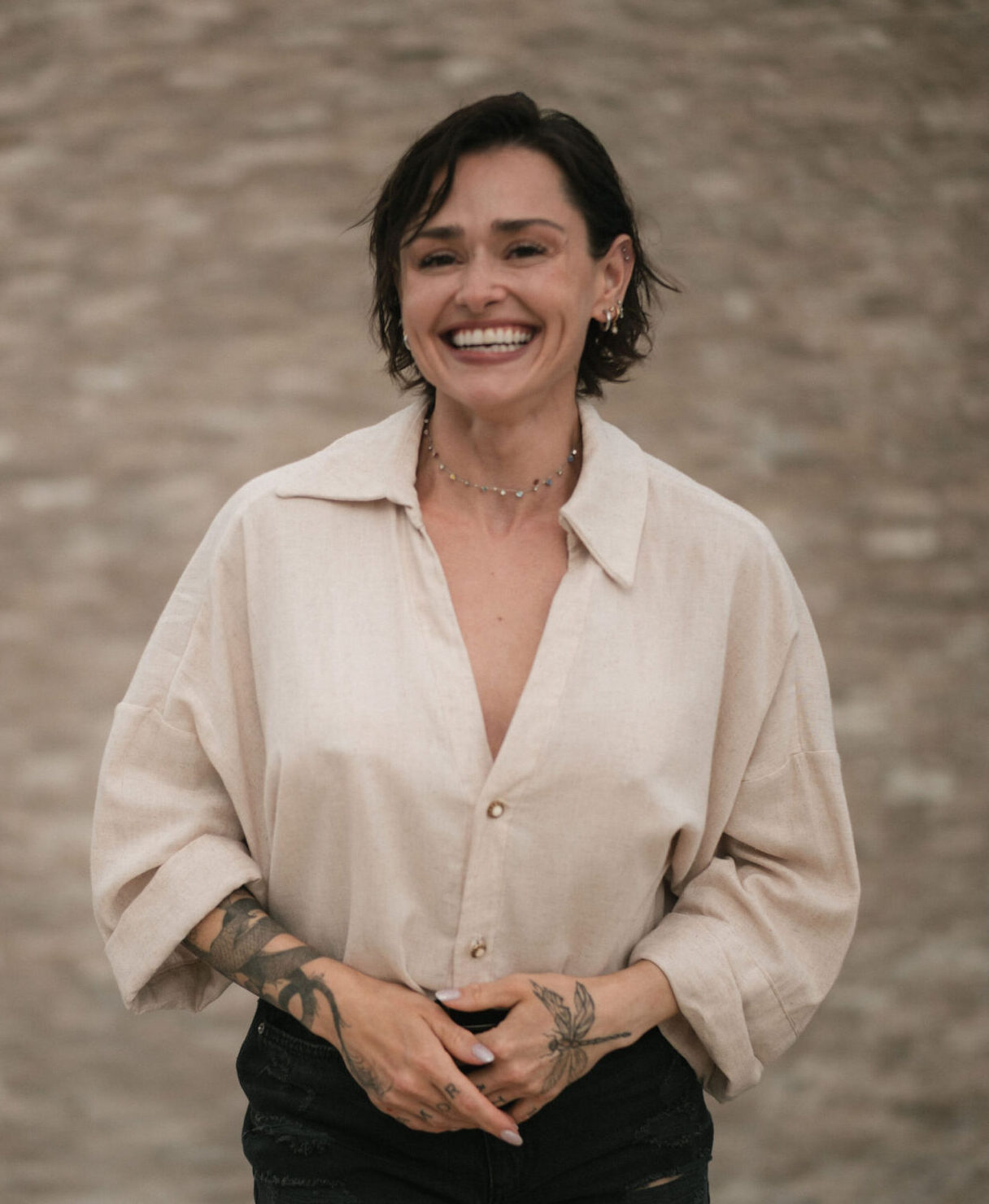
I’m Dariia. Founder of Synergy of Strength, intuitive guide, and lifelong student of self-connection and inner alignment. I’m passionate about helping people slow down, reconnect with themselves, and move through change with clarity and steadiness.
If you’re enjoying these reflections, you can explore my story, learn more about my work, or discover the coaching journeys and offerings available here.